Showing posts with label Cask vs Keg. Show all posts

Sunday, 4 May 2025

Sheffield SU's Beer and Cider festival 2025

 Afternoon, readers

       sadly I don't know which year this was in terms of numbers of Sheffield SU beer festivals previously. I now I went to SU Beer Fest in Sheffield in May 1994 for my first ever beer festival aged 19, so its more than 30 years old....

I would also like to point out that :

it is still on today;

and, crucially, that it is staffed by volunteers - so hopefully no staff received embolisms from spluttering drunkards.......

I arrived about 1415 and saw Mr Ciderman, who told me that they had sold all of yesterdays cider as well as half of today's cider the day before - it seems Friday had been a thirsty day! Am no expert on cider by any stretch but am always impressed to find a large range of ciders, many of which I admit I have never heard of.....

I started on a whole pint of evil filthy Thornbridge - their Day Maker, a 4% session IPA - as I supped,  the sky darkened and broiling clouds of wrath simmered in the air above - but thats just May. It went straight back to bright sunshine afterwards.

Next up I ventured into what seemed like the pitch black chasm of Hades, which was the main cask and keg bar - I couldn't see the pumpclips, less so the sheets of info, so I asked the lass behind the bar what she suggested - she froze - so I opted for a pint of Two by Two on kftc - it was a tasty if surprisingly flavoured pineapple sour - not that sour to be honest, but it was refreshing!

Having now selected Hopworks Ferocious Citra IPA and secured a table, my next visit involved finding out that they didnt think that was available, nor my second suggestion which was Triple Point Flux,  (which was on later) so I opted for a pint of Brol Future Depends, which I paid for - sadly the guy serving that said it had run out and the lass serving me said they couldnt do refunds so I opted for a pint of Pollys Little petal at 5.2% which cost the same. I went next for a pint of Bristol Beer Factory laser Juice which was a delicious and cloudy pale which I supped chatting to a chap called Tyler, who was probably from Leicestershire. I was then told that the Thornbridge DIPA had run out, but I opted to check on my next bar visit.

Sadly it really had, but the Triple Point Flux NEIPA was now available so I went for that before having my next to last which was to risk the Necessary Evil whisky aged stout at 13.5% so I only had a third,  and, I have to say - it was fairly easy drinking for its strength!

By now the luffly Tash and George had arrived to see me, along with Meathill who was working, and we quickly (not for me!) went for food, where it transpired that probably due to the level of University student demand, everything meat was chicken! I had a spicy chicken burger and chips which was very nice, along with my final pint which I think was Neptune Hidden Cove IPA - sadly all I know is it was cloudy!

So in summary - some aspects were misleading and therefore disappointing, and the lack of knowledge of what was available was frustrating, but, I did enjoy everything I tasted and I think that overall the festival was well organised - I don't know how the cider bar will be doing today with reduced stock but I hope all goes well!

Warmest regards

Wee Beefy


Friday, 20 March 2015

Cask versus keg versus keg versus cask versus.....

Hulloo,

       its the morning after the night before. My head has a dull ache, my mouth is socky, my eyes aren't functioning properly and my memory is shot. I found my sandwiches in my bag and some bits of food on the floor. What shall I do to remedy this malaise, I thought? I'll write a blog. Here it is.

Last night as part of Sheffield beer week I was at Shakespeares with Dan Baxter from Abbeydale, Robin Baker from the past, Sam from the Siren, two other Abbeydale brewers including one who used to brew at Mordue, Clare, Josh and the Shakespeares staff. On the bar was a cask version of Bigfoot red rye ale from Abbeydale. Along with a keg version of the same.

SCIENCE

Bigfoot is brewed with hops. Yes, that's right. Hops contain lupulin and grow on bines. The hops used have names and I recall them being called Amarillo, and another one. And carafe, which may be a malt. My memory is not helping me out here. But this just increases the science involved. Well. It doesn't.....

The beer definitely had rye in it and used softer malts (my term - cho welcome) to do something with the rye. The worry was that the rye would hide the hoppiness. I think to some extent it did.

Having said hello to Robin Baker I quickly got a half of each of the keg and the cask. The cask had cleared fine but was, in comparison, a little muddy. The hops were indeed impeded in the cask version, but less so in the keg - and both smelled fantastic. The keg was, obviously, colder, and a little more fizzy. This is what lets down keg beers, but also improves the experience of drinking heavier and stronger beers in the format. The cellar temperature was about right which made the comparison a bit easier.

Mr Dan bought me a pint of the cask and I enjoyed it more as I drank more of it, and I kept a 3rd of the keg aside to enjoy and contrast. Later, when we had moved onto tasting other delights, a man who looked like Gary Numan bemoaned our judgement that in this one, and just this one, instance, the keg version was better than the cask. Thinking about it now, it could actually have been Gary Numan. I mean, he surely likes real ale....

Later we tried Hobo, a hoppy Welsh lager from Tiny Rebel, as well as the odd smoked sour wheat ale from Siren and of course, their stunning Maiden blended and barrel aged ale which I will write more about in my next post. As the night drew to a close I had some more keg Bigfoot and this confirmed to me that iy was better than the cask.

And so it was, that a science had happened.

So what does this tell us about the merits of keg and cask? Absolutely nothing. Apart from that, some beers are better suited to keg, and some to cask. Simples. Irrespectve of which, I intend t go on drinking both.

Your science editor

Dr Beefalot.

Monday, 23 July 2012

Further science

Hello,

  following on from my experiment matching cask and Keykeg Kipling, I popped back to the Hallamshire House to try something else - this time the comparison was between the two versions of St Petersburg stout from Thornbridge.


This was an interesting one because I haven't tried St Petersburg for years, in fact my last taste was of a Thornbridge Islay cask reserve about 18 months ago, a stupendously smoky peated malt and lusciously alcoholic brew. Other than that, I have only tried it in cask once, and I bought quite a few of the original bottle conditioned bottles when they were launched. Would this knowledge gap help me to more openly assess the beer?

As per last time it was keg first. The obviously difference is that its served in a different glass, obviously only drinking it once this is hardly evidence of a deliberate serving policy but its interesting that Continental beers come in a different glass in order to enhance the flavour, not to mention as a savvy marketing ploy. I wonder if the branded glass for the Keykeg indicates a preference for that product?


Initial tastes were good, with sweetness at the front being quicly replaced by the roasted malt and slight coffee flavours, but very quickly I noticed that it was astringently hoppy. Even with my limited experience, I didn't recall it being dry or all that bitter. And besides, should that really be a characteristic of an imperial stout? There were quite a few similarities with a black IPA, which seemed strange. There was however a good robust body as you'd expect.

Chcolate, raisins, figs and fruits in alcohol were in there but somewhat restrained in the face of the hops, and the aftertaste reminded me of simcoe, as far as its even possible for me to recognise that! Aroma wise it was difficult to nail however. I was going to need assistance.

I got chatting to a couple in the snug and they offered valliantly to tell me what they thought the aroma was. We all seemed to know what it was, we certainly recognised it, but no comparative description could be found. In the end I picked out two customers in the larger back room at random, and asked them.

Hot off the press are 3 independent descriptions of the aroma of St Petersburg : Burnt Toast; Urinals, Tobacco.

Perhaps my rather odd gambit of "smell my sample" didn't provide the olfactory expertise I sought but I think I'd go with tobacco. Its strange though that the more musty flavours are hidden in the taste of the Keykeg beer.

The cask was also a bit of a revelation, mainly for the wrong reasons. It was a lot less dry which was good, but still bitter, much more so than I remembered. There was pleasing creamy roast malt and an earthy quality which I couldn't quite pick out but it was still too dry and too bitter. Perhaps some St Petersburg devotees could tell me if I have imagined it not having the dry bitterness of cascade or simcoe (or similar) previously?

Overall the beer was too smokey and the drier notes made it unbalanced. So in essence, I wasn't really sold on either of the formats. And what does this insight tell us about the relative merits of cask dispense and Keykeg?

Well, precisely nothing am afraid!

Lastly, I was talking to one of the barstaff, and he told me a few interesting things about Keykegs. Firstly he showed me one, which I now realise is remarkably similar, if not in mechanics, to a polypin (I understand theres a collapsible membrane inside). This also this gave me the opportunity to discover how light it was, which may be a deciding factor.

He also suggested that the brewer at Thornbridge (and this is highly unspecific, since there are about 5 or 6 in the team) didn't like serving beer that had been stored in the cask because it meant the beer was quickly oxidised. I think that the ambiguous nature of the chat probably meant this was not intended to be taken as an actual or full quote but the gist seemed to be that keeping a beer in correct cellar conditions for two weeks and then connecting it up to a handpump is not to the brewers liking because it doesn't taste fresh like it does on Keykeg.

I'll leave you to draw your own conclusions about whether this really stacks up, or indeed if it really is the brewery's outlook. but in terms of identifying that the beer is in peak condition I'd suggest that an injection of gas and a chilled dispense is unlikely to be the best meter of a beer's quality. A better approach is to consider that poor beer does not stand up to being served on gravity, so if you want to see if its well balanced and fresh, take it straight from the barrel. The lack of additional preparation and aids to dispense means its a naked beer, so you see it for what it is.

I think the only real progress in this debate would be if a beer I drink all the time was to appear in Keykeg. Then I could make an accurate assessment. The thing is, I don't want to drink Abbeydale Deception from a font....

Wee Beefy


Friday, 13 July 2012

Cask vs Keg - unscientific exploration

Hello,

  tonight, or rather significantly earlier, I had the chance to do something I had never had the chance to do before. Now, those of you who know me may well be waiting for me to say "stop it" in a harsh yet condescending voice, but this is a real and quite serious concept. I tried a cask and a Keykeg version of a beer side by side.

Hallamshire Haus


Twas at the above venue that I finally "broke my duck" (stop it...) on the keg vs cask tasting event, and I was there in good time around half 6 for the privilege. In order to try and not be biased (hence the unscientific tone of the title) I tried a half of the Keykeg Thornbridge Kipling first, and then the cask.


The Keykeg was obviously different on the basis of its higher carbonation and on being colder. It was also served in a tall rather than half pint glass (making it a girl's drink of course), and was minutely lighter coloured than the cask.


I didn't actually mind the KK. It was hardly an affront to beer, but was noticeably similar to some of the bottled offerings I have tasted. Except, it wasn't as smooth, and given that recently I have been blown away by the drinkability of bottled Welbeck Abbey Portland Black that's not a compliment.

The flavour was very dry and with a lingering bitterness hindered by a fizz that made the sharper drier notes of the hops linger instead of dispersing into the overall taste. There was a hint of tart peach as well.

The cask version had a slight lemony flavour and a barely discernable lychee aroma, and was smoother and heavier, with a much more satisfying mouthfeel for a start.  Having said that though there wasn't a huge difference, except that it lasted about a quarter of the time the fizzy cold version did.

Also of course, there is a price difference - the Kipling on cask was £3.20 a pint, and the Keykeg 60p more, and therefore nearly 20% more expensive, using rudimentary and likely not rigid mathematical fact. It seems Steel City Ale's Forum post about the beer being 4/3rds more expensive more or less pans out.

For the next round I had another half of the cask first (eschewing the delights of the bottle) and noticed little change in the flavour or aroma. Trying the Keykeg second this time the main difference was that it seemed thin, overly bitter with an unappetising paracetamol flavour, but had an enchanting aroma and hint of Elderflower.


So, overall, its difficult to say whether or not my preconceptions were at work, although I can confirm that I have not liked cask Kipling as much lately compared with last year's tastings, but in conclusion Keykeg seems to be a colder, less subtle, more carbonated version of a cask ale, served without the characteristic development that a beer would undergo whilst in cask. So not particularly good, unless of course there is no cask available......

Closed Shop

Seeing as I was out, and research completed for the night, I reluctantly popped in the Closed Shop across the road. I say reluctantly, because the Landlord/Licensee was so rude last time I went in that I vowed never to return.

On entering I was greeted with an empty pub, a sign outside seeming to suggest that Tanglefoot was on, and only 4 of 6 pumps in use. I realise that four is still a good choice, but it was Landlord and Doom Bar on one end, and Castle Rock Harvest and Kelham Easy Rider. All except the Doom Bar, which I avoid deliberately, are barely even fallback beers.

I asked for  a half of the Harvest and it was rancid. I accepted a taste of the Kelham and it was fluffy and tired. The Taylors was overly sweet but OK, and actually quite enjoyable. The lass behind the bar proved good company and it was a good opportunity to have a chat about pubs and music venues in Sheffield, and a change to see a friendly face in there. Yet, bar a chap running in and depositing a glass on the bar then running to the loo and back out (I assume he was drinking out the front, unless there's some kind of odd unwritten lav for receptacle bartering system in the area), I was the only punter for 20 minutes. Not looking good.

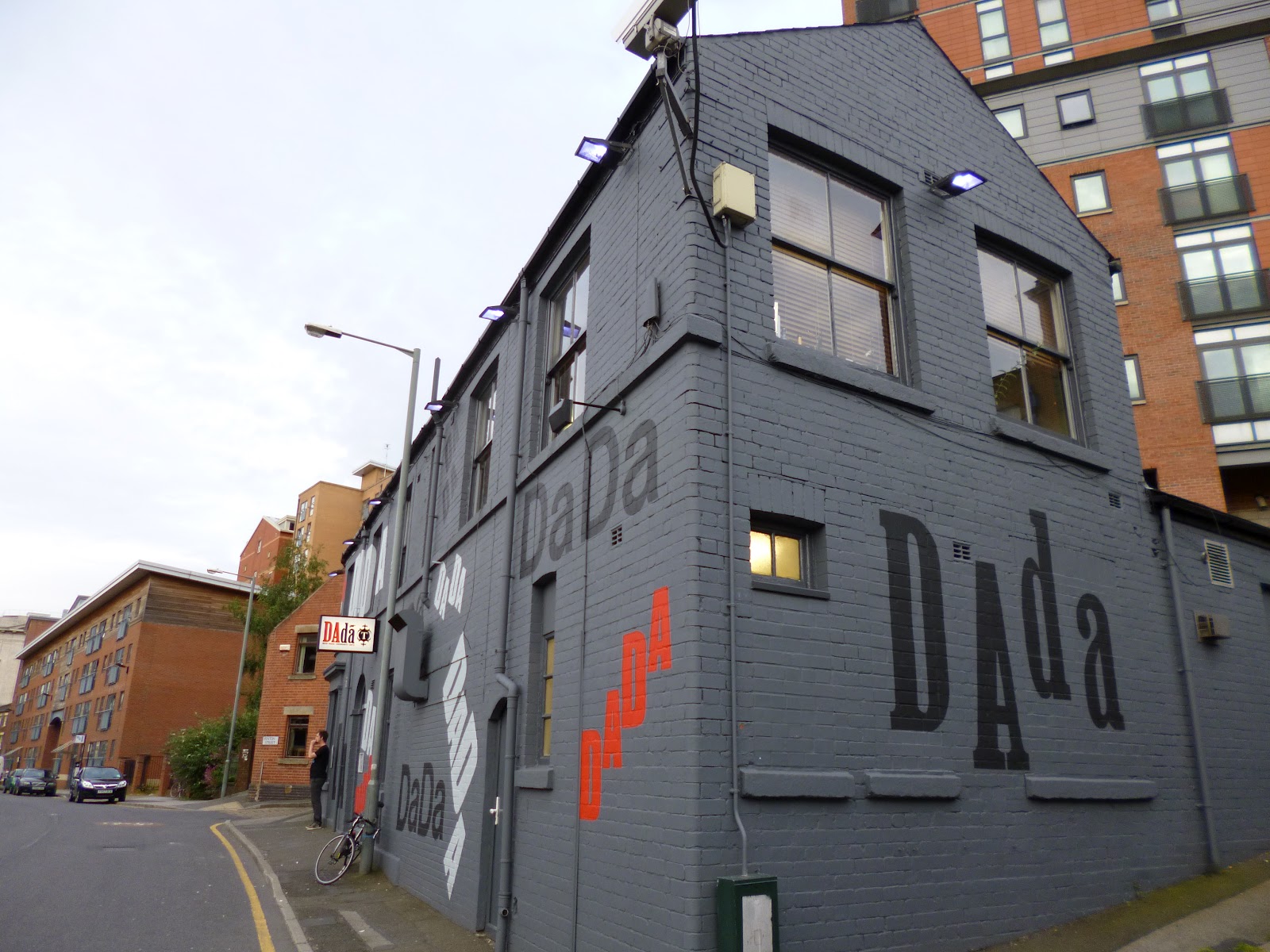
Dada

My last stop was in the above and I finally got to try the Magic Rock Clown Juice Wit IPA. It was on Keykeg, it was £5.80 a pint but only 7%, and was nowhere near as good as I had hoped. Creamy but Refreshing wheat? No. Dry but complimentary hops? Nope. Balance? Not much. It was basically a wheat beer with an ascorbic then cloying bitterness, that didn't develop through the drink. Humph.


Luckily I had the company of Steph and Emily to wile away my visit, and a truly splendid pint of Pollards Coffee milk stout to accompany it, so this was still an enjoyable riposte before I tackled the trek home.

Roll on Saturday at Nether Edge!

Wee Beefy

Sunday, 12 February 2012

Wee Beefy's beer question bites - what's the point of keg?

Good evening
   last night I was at Davefromtshop's with he (for it is) and Andrew, sampling a rather large amount of ale after Davefromtshop's had closed. During our many rambling conversational detours we happened across that old steamer "cask vs keg". I wondered, in light of recent news and trends of micro and/or craft brewers, if keg was an option for all brewers and how that impacted on me as a beer drinker.

Hence ...

Keg beer - what's in it for the brewers?

To understand this, lets look at who brews it and how it benefits them. Ergo, we need to unhelpfully label loads of disparate brewing types together for reasons of journalistic ease.

Lets look first at one imagined amorphous mass of Brewers. Hyowge ones.

Its easy to assume that, having been the brainchild of them in the 30's initially, but then increasingly leading the market for them in the 60's and 70's, its only big brewers that brew keg. Yet as recently as the 90's when insufferable dross like Caffreys Milm-flow was on the march, almost every size of brewer, especially the regionals, put gas in their beer and put their beer in kegs.

In the UK irrespective of lagers, Guinness and Caffreys and most large Scottish brewers beer comes exclusively or almost entirely in keg form. Its a big share of the market so someone must be doing something right. The major brewers rely on keg heavily and also seem to make immense profits from their products. It follows therefore that keg really does pay its way for them.

Meanwhile the more medium, regional brewers keg revolution has been less stratospheric, but has been a noticeable feature in their pubs. Regionals like Thwaites wanted to sell more beer and recognised that some people like their beer smooth and achingly uniform in presentation. They produced smooth versions of some of their quality cask brands. As with keg Pedigree, even good cask beer brands some people will only drink under a gas blanket (is this a euphemism?).


It appears then that regional brewers recognise they need a mix of keg beers and real ales, to appeal to all tastes across their estates. Granted a few regionals have fallen (mainly to the vile spectre of Greedy King) but overall its arguable they are making profits through offering a "complete range" that includes keg. So keg and regional brewers are friends.

 Surely though, highly adventurous, proud, innovative, barrier breaking micro brewers wouldn't entertain the idea? Well, even before developments in keykeg, they already did.

Isle of Mull and Colonsay breweries by necessity did keg or brewery conditioned ales, Colonsay I think from day one, Meantime and Freedom and Mash did keg beers from the start, Moravka unfiltered lager brewed in Taddington was and is a keg product, and there were other small lager producers such as Packhorse in Kent. Nowadays, the micro's keg revolution has become more widespread, so its likely more viable, with big players like Brewdog opening many keg only venues, and Camden, Lovibonds, Thornbridge, Magic Rock and other new breweries having  keg versions of their beers available (and this year Camden look to be keg only).

Keg beer - what's in it for the drinkers?

So everyone is doing it, and its likely that everyone makes money from it. So why doesn't every brewery do keg then?  If it suits the accountant and many of the customers, why waste time and resources on real ale?

Well, aside from the obvious missed market of thirsty real ale drinkers, the two styles are of course different, affording dissimilar benefits. I have tried to illustrate the benefits and downsides below. In my opinion, the  :

Reasons for brewing Keg: are to control quality and consistency, to extend and then predict precise shelf life, to make sure that the beer tastes as the brewer intends everywhere its sold, to market beer for the large majority of people who never drink real ale. Reasons not to: The beer cannot improve once it enters the keg. The beer can still lose condition and quality. Its often cold and fizzy.

Reasons for brewing Cask: are that the beer reaches customers fresh, it is a living thus developing and potentially improving product, it appeals to the burgeoning sector of real ale drinkers, it enables those with cellarmanship skills and brewers with brewing skills to make ordinary beer extraordinary, and extraordinary beer a one off celebration of the brewers art. Reasons not to : the beer can go off more easily, the beer is more susceptible to outside influence i.e temperature or disturbance in transit, the beer will never taste the same in any two venues.

So if you look at the above, the proposition may be - do brewers favour keg to make sure that no matter how good or bad the beer is its always consistent? And therefore, do real ale brewers favour that style to challenge the bland regularity of keg, but in doing so risk producing inconsistent beer?

Well, I think both of those statements are correct, but since the above reasons aren't diametrically opposed and there could be, and indeed is, a cross over of the two sets of brewing ethics, this means the argument for real ale is just as strong as keg. You can follow both routes!

You can use the finest ingredients and brewing expertise to make a premium quality keg beer but not have to worry about consistency, whilst you can also use the technologies of keg production to regularise the production of cask and in doing so achieve quality and consistency. Thus both routes are interchangeable. That way everyone wins.

Basically, each process is benevolent enough that should you, god forbid, choose to ditch cask for keg, you can still take the ethos of cask production and produce that dream beer, that epitome of brewing excellence, and then seal it safe in a tub o' gas.

Which means the only real question is, which one tastes better?


Well, I prefer cask. Although I love Bernard Dark. And I love Brewdog Hardcore IPA in a bottle. And, I like flat Moonshine in a polypin, and draught Bass served by gravity dispense with no head. So really,as a consumer, I have the best of both worlds, and that should be celebrated.

  Wee Beefy